








Working at height is a critical factor in the fast-paced operational environment of industrial operations, usually determining the effectiveness and safety of thousands of tasks. From maintenance work in factory factories to installation jobs in warehouses, accessing heights should be accomplished efficiently and securely. Self-propelled scissor lifts have become a revolutionary option, revolutionizing the manner in which the sector works at height and significantly improving operational effectiveness. This article will delve profoundly into how these versatile devices can improve industrial processes.
Fast Movement and Easy Deployment
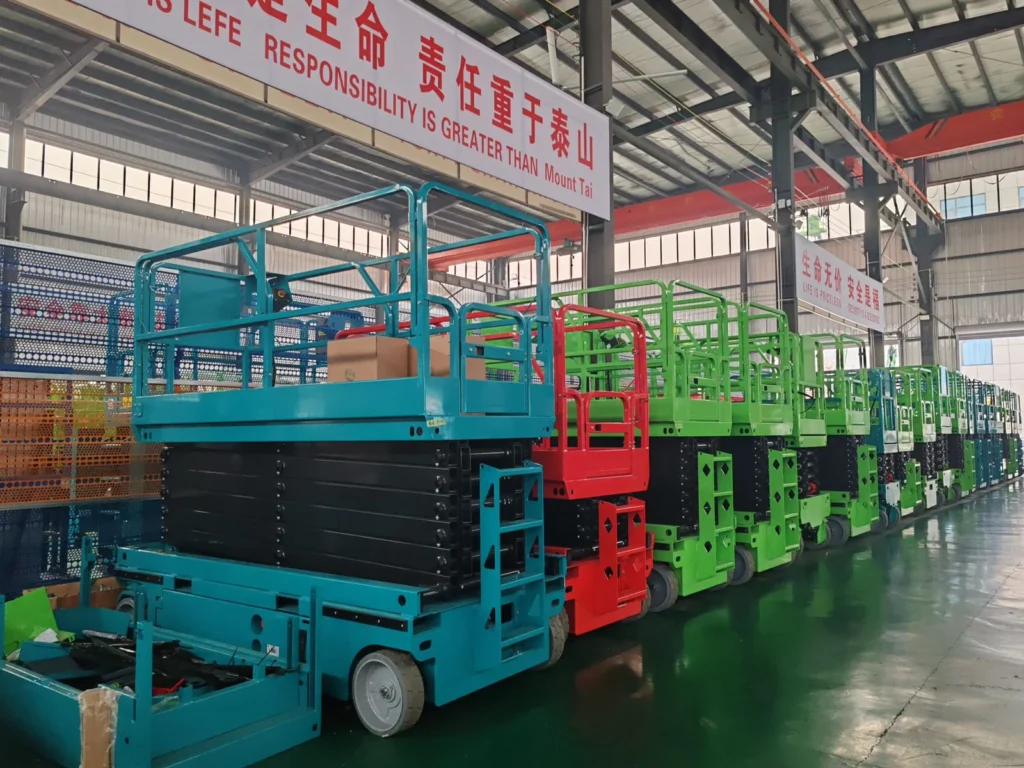
One of the key reasons why self-propelled scissor lifts are more efficient is the high mobility of the lifts. Self-propelled scissor lifts are different from fixed lifts or cranes, self-propelled scissor lifts do not require complicated installation and transportation arrangements and can be moved independently within industrial premises. With their powerful motors and sturdy tires or tracks, there is no trouble for self-propelled scissor lifts to move across various terrains including rough grounds, gravel roads and indoor premises.
Free mobility minimizes the need for other machines to transport the lift to different working areas, saving time and labor. Second, the setup process for a self-propelled scissor lift is also very quick. The driver can drive the lift to where it is required, deploy the stabilizers, and start working in minutes. This quick deployment allows employees to perform tasks rapidly, minimizing time between projects and maximizing overall productivity.
Efficient Vertical and Horizontal Working Range
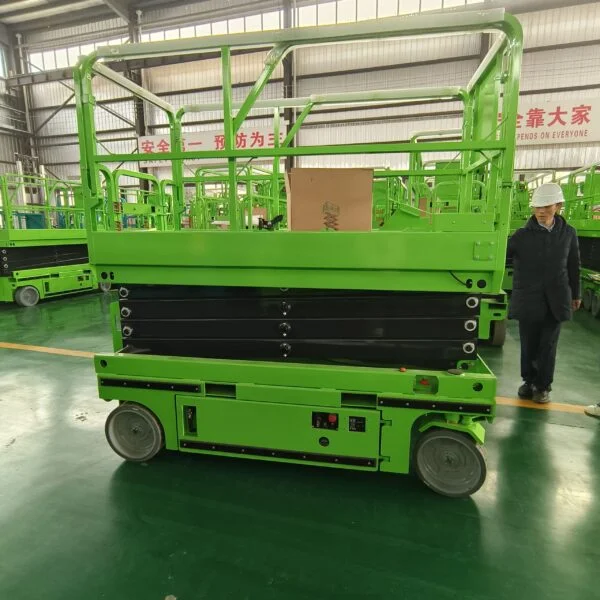
Self-propelled scissors lifts are designed to provide efficient vertical and horizontal access to overhead working heights. Smooth and stable vertical movement is made possible by the scissor-type mechanical system, allowing operators to access heights of a few meters up to more than 18 meters, depending on the unit. Such versatility finds its practicality in multiple industrial applications, from basic maintenance low-level machinery to overhead installation work on large structures.
In addition to their vertical reach, some of the self-propelled scissor lifts also feature horizontal reach. An extendable platform or articulated arm provides access to positions not immediately above the lift in certain types. Horizontal reach is especially useful in complex industrial applications where obstructions can block the way in vertical access. By utilizing both the horizontal and vertical movement, self-propelled scissor lifts enable workers to do a job more completely and efficiently, reducing the need for using several units of equipment or repositioning.
Multi-person Capacity Increases Productivity
Another significant benefit of self-propelled scissor lifts in the industrial setting is that they can accommodate more than one worker at once. There are some models that have spacious platforms that can hold two or more operators, their equipment and their material. The multi-operator feature enables groups to work together to complete overhead tasks such as the installation of large panels, inspection, or performing maintenance on large systems.
Compatible with a Wide Range of Industrial Equipment
Self-propelled scissor lifts are highly adaptable to be applied with a majority of industrial equipment, hence even more efficient in the workplace. They are capable of being paired with devices such as drills, welders and inspection cameras, allowing operators to perform specialized tasks directly from the lift’s platform. In addition, a majority of the lifts incorporate accessory mounting points, enabling the attachment of custom-made accessories tailored to specific industrial requirements.
For example, in a factory, a self-propelled scissor lift can be equipped with a dedicated tool rack for precise assembly work at top heights. In a construction site, it can be equipped with a material hoist to transport building materials up to top heights. Compatibility with various equipment avoids workers from frequent switching between machines and saves effort and time as well as ensures a seamless workflow.
Conclusion
Self-propelled scissor lifts are an indispensable asset of the industrial operations today, with several qualities that make it more effective while undertaking aerial working operations. Its rapid mobility rate, productive vertical and horizontal workspace, carriage capacity for more than one person, and versatility to be operated with other equipment all help to streamline industrial process and increase overall productivity. As the market changes and demands for efficiency and safety continue to increase, self-propelled scissor lifts are expected to play an increasingly central role in shaping the future of aerial working in industry. Get in touch with us if you would like to learn more about this equipment.