








In this age of warehouse logistics operations, productivity and profitability levels are defined by the speed and efficiency of cargo loading and unloading. Unloading and loading of cargo late is a recipe for increased costs, late delivery, and customer unrest. Hydraulic loading dock levelers are the industry’s top choice, providing an easy and convenient means of optimizing cargo unloading and loading process. This piece will examine ways in which dock levelers can enhance operational efficiency within warehouse logistics settings.
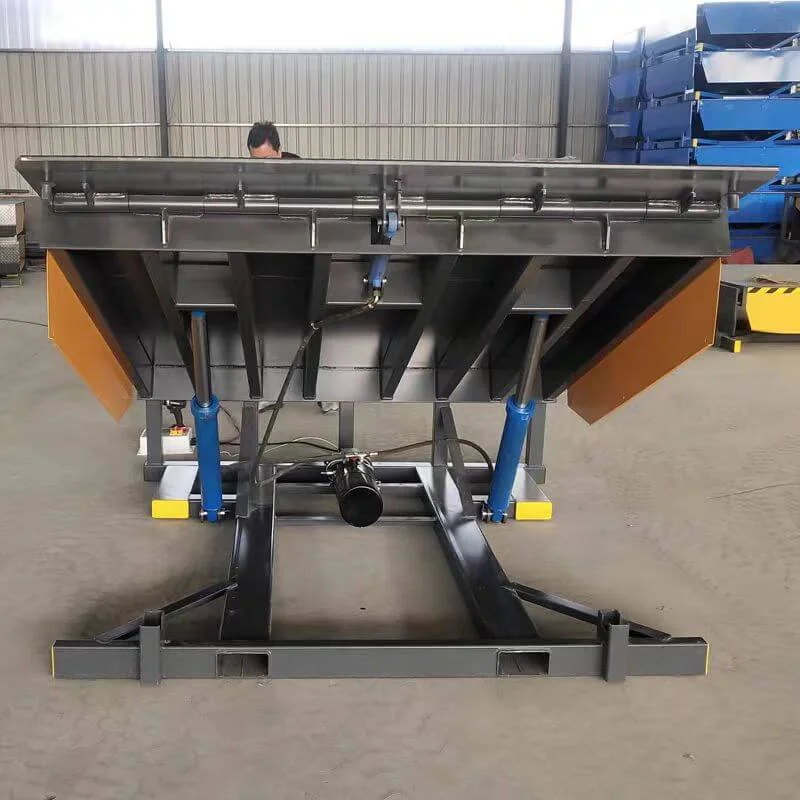
Rapid and Auto Height Adjustment
One of the most significant characteristics that make hydraulic loading dock levelers efficient is that they can change their height automatically and very fast. The levels have a powerful hydraulic system that is capable of lifting or lowering the level instantly to the truck bed level. This eliminates the labor involved in lifting or dropping the level by hand, hence saving a significant amount of time per loading and unloading cycle.
For example, in a busy distribution center with vehicles continuously coming in and out, hydraulic loading dock levelers can robotically adapt to the height changes of different cars in seconds. It may be a low-rider delivery truck or a high-walled semi-trailer; the loading dock leveler facilitates seamless transition from the loading dock to the vehicle so that forklifts and other equipment can go in and out without a hitch. This quick adaptability function greatly shortens each unloading and loading activity, enabling the warehouse to handle more products within a specific time.
Seamless Integration with the Material Dealing with Equipment
The hydraulic loading dock leveler is designed to combine seamlessly with all sorts of material handling equipment typically used in warehouses, such as forklifts, pallet vans and conveyors. The platform’s flat, stable surface provides a safe running platform for these devices, making sure that items can be moved safely and efficiently.
When a forklift arrives at the loading dock, the flat surface of the dock leveler offers smooth in and out transportation, lowering the threat of accidents and cargo damage. Some of the advanced hydraulic levelers for loading docks can also be coupled with conveyor belt systems to offer an automated system for loading and unloading. For example, conveyor belts in enormous online retail distribution centers can deliver packages directly to the dock leveler, which then delivers the packages to the truck leveler continuously. This interfacing with material handling equipment not only speeds up the loading and offloading of cargo, but also reduces dependence on human effort, further increasing overall efficiency.
Durability and Minimal Downtime
In the demanding warehouse logistics environment, equipment durability is necessary for maintaining high efficiency. Hydraulic loading dock levelers are constructed from strong materials and advanced technology, which possess high resistance to wear. Hydraulic components are designed to handle heavy loads and frequent use in order to serve for long intervals with less maintenance.
Also, these loading dock levelers are equipped with safety devices and diagnostic mechanisms that can detect potential problems earlier. During malfunctions, safety features are embedded in the levelers that will immediately stop operations to prevent accidents, while diagnostic tools help technicians quickly find and solve problems. This proactive maintenance routine reduces downtime significantly as repairs or adjustments can be easily done quickly without significant disruptions to cargo handling operations.
Optimize Dock Space Utilization
Effective space utilization in docks is another significant issue to improve cargo handling efficiency. Hydraulic loading dock levelers are available in a number of sizes and configurations such that warehouses can select the most appropriate model to meet their unique requirements. Certain dock levelers recess into the dock floor and, their not in use, expose a flush surface, thereby offering maximum available space to other operations.
In addition, the warehouse can optimize dock operations by using multiple hydraulic loading dock levelers to service multiple trucks at different loading and unloading docks concurrently. By coordinating the use of multiple dock levelers, the warehouse can optimize cargo throughput and make certain that trucks can be loaded and unloaded as rapidly as possible. This efficient use of loading and unloading dock space not only improves cargo unloading and loading efficiency, but also reduces waiting time for truck drivers and simplifies the entire logistics process.
Conclusion
Hydraulic loading dock levelers are an integral part of modern warehouse logistics operation today, providing an easy, efficient, and reliable way to load and unload cargo. Their ability to quickly adjust height, simplicity of integration with material handling equipment, robustness, and potential to optimize space utilization at the dock all serve to ease the loading and unloading process. Since there is growing demand for faster and more efficient logistics, hydraulic loading dock levelers will be performing an increasingly vital function to improve productivity and reduce costs. If you are keen on the equipment, please get in touch with us.